If you’ve been squatting for months with zero booty growth, you’re not alone — and you’re definitely not working smart. Growing your glutes requires a systematic, progressive approach that most generic workout guides completely ignore.
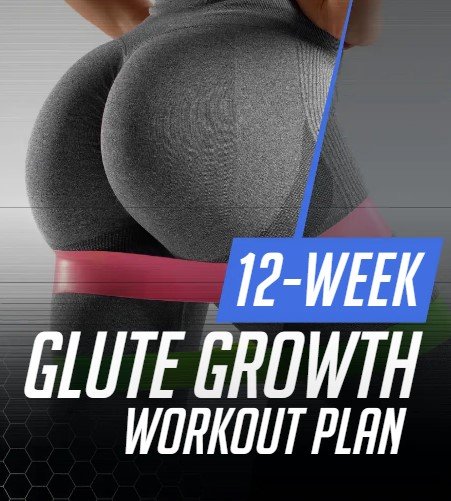
This 12-week glute growth workout plan is built on exercise science: progressive overload, muscle activation sequencing, and strategic recovery. Follow it faithfully and you will see a real, visible difference in 3 months.
Quick Note: This plan works best when paired with high-quality resistance bands and a solid adjustable booty band set. We’ll call out our top picks throughout the guide.
Why Most Glute Workouts Fail
Before diving into the plan, let’s talk about why most women plateau:
- They do the same weight every week — muscles adapt fast and stop growing
- They skip glute activation — cold glutes don’t fire properly during big lifts
- They train too infrequently — glutes can handle 3–4 sessions per week
- They rely only on squats — squats are great, but they miss the gluteus medius and minimus
This plan fixes all four issues using a phased, progressive approach.
How the 12-Week Plan Is Structured
The program is divided into three 4-week phases, each one building on the last:
| Phase | Focus | Sets Per Week |
|---|---|---|
| Phase 1 (Weeks 1–4) | Muscle Activation & Foundation | 10–14 sets |
| Phase 2 (Weeks 5–8) | Progressive Overload & Volume | 15–20 sets |
| Phase 3 (Weeks 9–12) | Peak Intensity & Definition | 20–25 sets |
Each phase increases volume and intensity, which is the core driver of hypertrophy (muscle growth).
Phase 1: Weeks 1–4 — Activation & Foundation
Goal: Wake up your glutes, build the mind-muscle connection, and establish baseline strength.
Train 3 days per week with at least one rest day between sessions.
Week 1–4 Workout A (Monday)
| Exercise | Sets | Reps | Rest |
|---|---|---|---|
| Glute Bridge | 3 | 15 | 45s |
| Clamshell (with band) | 3 | 15 each | 45s |
| Bodyweight Squat | 3 | 12 | 60s |
| Donkey Kick | 3 | 12 each | 45s |
| Side-Lying Hip Abduction | 3 | 15 each | 45s |
Week 1–4 Workout B (Wednesday)
| Exercise | Sets | Reps | Rest |
|---|---|---|---|
| Romanian Deadlift (light) | 3 | 12 | 60s |
| Sumo Squat | 3 | 12 | 60s |
| Fire Hydrant (with band) | 3 | 15 each | 45s |
| Step-Up | 3 | 10 each | 60s |
| Seated Hip Abduction | 3 | 20 | 45s |
Week 1–4 Workout C (Friday)
| Exercise | Sets | Reps | Rest |
|---|---|---|---|
| Hip Thrust (bodyweight) | 4 | 15 | 60s |
| Lateral Band Walk | 3 | 20 each | 45s |
| Bulgarian Split Squat | 3 | 10 each | 90s |
| Cable Kickback (or band) | 3 | 15 each | 45s |
| Glute Bridge Hold (30s) | 3 | — | 30s |
Recommended Gear: A quality resistance band set is essential for Phase 1. Look for a set with multiple resistance levels (light, medium, heavy) so you can progress week by week. A non-slip booty band is a game-changer for clamshells and hip abductions.
Phase 2: Weeks 5–8 — Progressive Overload
Goal: Add load and increase volume to trigger new muscle growth.
Train 4 days per week (Mon / Tue / Thu / Fri). You’ll now need access to weights or a good set of dumbbells.
Key Changes From Phase 1
- Add weight to hip thrusts (use a dumbbell, barbell, or weighted plate)
- Increase band resistance from light → medium
- Add one extra set to every compound movement
- Reduce rest periods by 15 seconds on isolation exercises
Sample Week 5–8 Workout A (Monday — Glute Dominant)
| Exercise | Sets | Reps | Rest |
|---|---|---|---|
| Barbell Hip Thrust | 4 | 10 | 90s |
| Romanian Deadlift | 4 | 10 | 90s |
| Cable Glute Kickback | 3 | 12 each | 60s |
| Band Clamshell | 3 | 20 each | 45s |
| Frog Pump | 3 | 20 | 30s |
Pro Tip: A hip thrust pad protects your hips when loading up the barbell. Investing in a good barbell pad or a specialized hip thrust belt makes heavier loading much more comfortable and consistent.
Phase 3: Weeks 9–12 — Peak Intensity
Goal: Maximum glute stimulus with controlled fatigue and strategic deload.
Train 4 days per week with a deload in Week 12 (50% volume reduction).
Key Changes From Phase 2
- Switch to heavier loads with lower reps (6–8) on compound lifts
- Add drop sets on isolation exercises (final set only)
- Include supersets for time efficiency and metabolic stress
- Week 12 = Deload (same exercises, half the sets, 60% of the weight)
Sample Week 9–11 Workout (Friday — High Intensity)
| Exercise | Sets | Reps | Notes |
|---|---|---|---|
| Barbell Hip Thrust | 4 | 8 | Heavy — go near failure |
| Bulgarian Split Squat | 4 | 8 each | Hold dumbbells |
| Cable Kickback superset w/ Fire Hydrant | 3 | 12 + 15 | Back-to-back, no rest |
| Banded Hip Abduction | 3 | 25 | Drop set on final round |
| Single-Leg Glute Bridge | 3 | 12 each | Bodyweight, slow tempo |
Nutrition to Fuel Glute Growth
Training is only half the equation. You must eat enough protein to build muscle.
Daily Targets
- Protein: 0.7–1g per pound of bodyweight (chicken, eggs, Greek yogurt, protein powder)
- Carbs: Fuel your workouts — don’t fear them (oats, rice, sweet potato)
- Calories: Aim for a 100–300 calorie surplus if you want to build muscle (not a deficit)
Supplement Spotlight: A high-quality whey or plant-based protein powder makes hitting your daily protein targets so much easier. Look for one with 20–25g of protein per serving and minimal added sugars.
Meal Timing
- Eat 20–40g of protein within 90 minutes of training
- Don’t train completely fasted — have a small carb snack beforehand for energy
Week-by-Week Progress Tracking
To know if your plan is working, track these metrics every 2 weeks:
| Week | Hip Measurement | Squat Weight | Hip Thrust Weight | Observations |
|---|---|---|---|---|
| Week 0 (Start) | ||||
| Week 2 | ||||
| Week 4 | ||||
| Week 6 | ||||
| Week 8 | ||||
| Week 10 | ||||
| Week 12 |
Progress photos taken in the same pose, same lighting, every 4 weeks are the most motivating tool you have.
Essential Equipment for This Plan
Getting the right tools upfront will make every session more effective:
- Resistance Bands (multiple levels) — for activation and isolation work
- Dumbbells or Adjustable Weight Set — for Phase 2 and 3 loading
- Hip Thrust Pad / Barbell Pad — essential for comfortable heavy loading
- Fitted Leggings — seeing your muscles work improves mind-muscle connection
- Workout Journal or Tracking App — log every weight and rep to build progressive overload
Our Pick: Adjustable dumbbells are the best investment for home training. A set that goes from 5–50 lbs lets you progress through all three phases without buying multiple sets.
Frequently Asked Questions
How long does it take to grow your glutes?
Visible glute growth typically takes 8–16 weeks of consistent, progressive training paired with adequate protein intake. This 12-week program is specifically designed to maximize results within that window.
Can I do this plan at home?
Yes! Phase 1 and most of Phase 2 can be done with resistance bands alone. Phase 3 benefits from dumbbells or barbells for maximum overload.
How many days a week should I train my glutes?
This plan starts at 3 days/week and progresses to 4 days/week. Research shows the glutes can recover well from 3–5 sessions per week when volume is managed properly.
What should I eat to grow my glutes faster?
Prioritize protein (chicken, eggs, fish, Greek yogurt, protein powder) and make sure you’re not in a calorie deficit. Light surplus calories + high protein = muscle growth.
Is cardio bad for glute growth?
Not if managed well. Excessive cardio can interfere with muscle building. Keep cardio to 2–3 sessions of 20–30 minutes of low-intensity steady-state (walking, cycling) during your building phase.
Final Words: Consistency Is the Real Secret
No 12-week plan works if you skip sessions. The glutes are one of the body’s most adaptive muscles — they respond extremely well to consistent, progressive training. Stick with this plan, fuel your body right, and take your progress photos. By Week 12, you will be shocked by the transformation.
Pin this plan, share it with your gym bestie, and come back every week to track your progress.