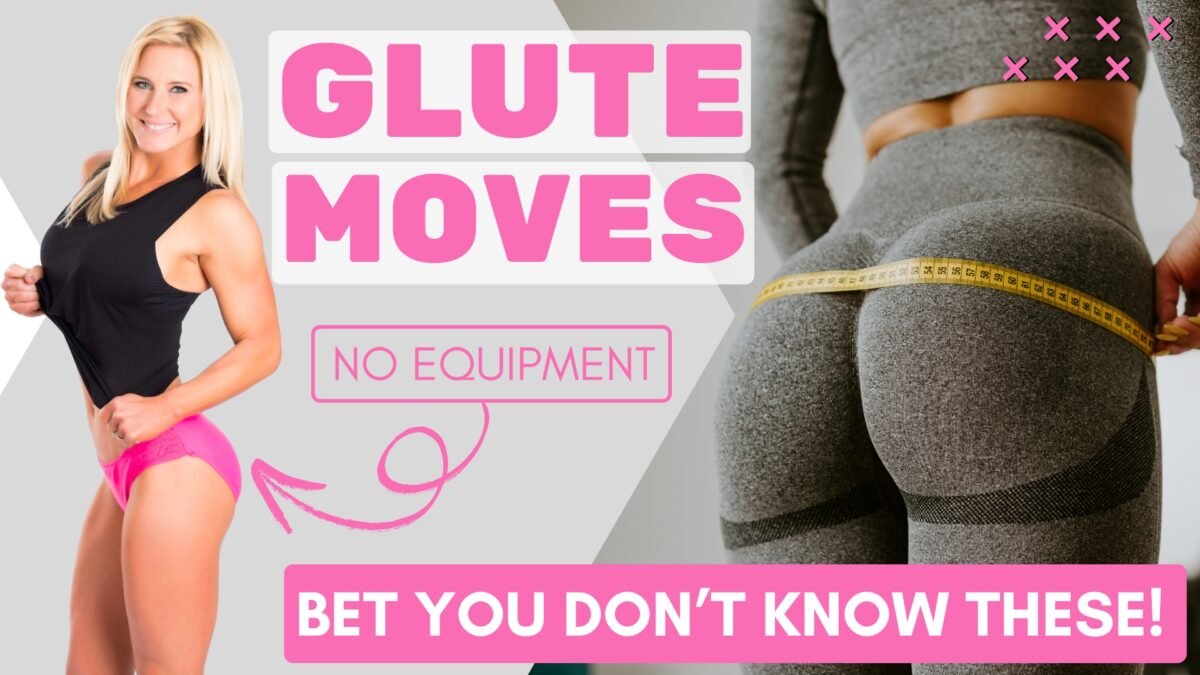
Not all glute exercises are created equal. If you’ve been doing endless squats and wondering why your booty still isn’t lifted and round, here’s the truth: squats alone aren’t enough. The gluteus maximus, medius, and minimus each need targeted stimulus from different angles.
This guide breaks down the 5 most effective glute moves — the ones exercise scientists and elite trainers keep coming back to — along with the exact sets, reps, and tips to get fast, visible results.
What Makes a Glute Exercise Truly Effective?
Before we get to the moves, understand what you’re looking for in a great glute exercise:
- Peak contraction at the right angle — The glutes are strongest at hip extension, so exercises performed at the hip hinge position produce the most muscle fiber recruitment.
- Continuous tension — Bands and cables keep the muscle under load throughout the entire range of motion.
- Isolation options — Compound lifts (squats, deadlifts) are important, but isolation moves (kickbacks, abductions) fill in the gaps.
The 5 moves below check every box.
Move 1: Barbell Hip Thrust — The King of Glute Exercises
The barbell hip thrust consistently produces the highest glute EMG activation of any exercise. Period. It loads the glute at full hip extension — the exact position where the muscle is most active.
How to Do It
- Sit on the floor with your upper back against a bench
- Place a barbell across your hips (use a pad for comfort)
- Plant your feet flat, hip-width apart
- Drive your hips up until your body forms a straight line from knees to shoulders
- Squeeze hard at the top for 1 second
- Lower slowly (3 seconds down)
Sets & Reps
- Beginners: 3 sets × 12–15 reps (bodyweight or light dumbbell)
- Intermediate: 4 sets × 8–10 reps (loaded barbell)
- Advanced: 4–5 sets × 6–8 reps (heavy barbell + tempo work)
Gear Pick: A thick barbell hip thrust pad is non-negotiable when going heavy. It distributes pressure evenly and lets you focus on the glute squeeze instead of the discomfort.
Move 2: Romanian Deadlift — For a Deeper Glute Stretch
The Romanian Deadlift (RDL) is gold for hitting the lower glutes and the glute-hamstring tie-in — the area that creates that “underbutt” look.
How to Do It
- Stand holding dumbbells or a barbell in front of your thighs
- Hinge at the hips while keeping your back flat and knees soft
- Lower the weight until you feel a deep stretch in your hamstrings/glutes
- Drive your hips forward to return to standing — don’t just straighten your knees
- Squeeze glutes at the top
Common mistake: Bending the knees too much and turning it into a squat. Keep that hip hinge pattern.
Sets & Reps
- 4 sets × 10–12 reps
- Tempo: 3 seconds down, 1 second pause, explosive up
Recommended: Adjustable dumbbells make RDLs easy to progress at home without buying a full barbell setup. A set with a comfortable grip and weight increments from 5–50 lbs covers you through months of progressive overload.
Move 3: Cable Glute Kickback — Isolation at Its Best
The cable kickback keeps your glute under constant tension throughout the full range of motion — something free weights can’t do. This move is exceptional for targeting the gluteus maximus and creating that lifted, rounded shape.
How to Do It
- Attach an ankle cuff to a low cable pulley
- Stand facing the machine, holding the frame for balance
- Keep your standing knee soft and your core braced
- Kick the working leg back and up, squeezing the glute at the top
- Lower slowly — don’t let the weight stack drop fast
No cable machine? Use a resistance band anchored low. You’ll get 80% of the benefit and can do it anywhere.
Sets & Reps
- 3–4 sets × 12–15 reps each leg
- Go slow on the return — 3-second negative for maximum tension
Gear Tip: A premium ankle resistance band cuff with adjustable straps gives you the cable kickback feel at home. Look for ones with a metal D-ring for durability.
Move 4: Banded Lateral Walk — The Gluteus Medius Shaper
Most women neglect the gluteus medius — the side muscle responsible for hip width, stability, and that rounded “outer booty” curvature. The banded lateral walk is one of the best ways to target it.
How to Do It
- Place a resistance band just above your knees
- Assume a partial squat position (hips back, chest up)
- Step sideways — 10–15 steps in one direction, then return
- Keep constant tension on the band — don’t let your knees cave in
- Squeeze your glutes with every step
Pro tip: Maintain the squat position throughout. Standing upright transfers the work from glutes to hip flexors.
Sets & Reps
- 3 sets × 15 steps each direction
- Perfect as a warm-up or a finisher
Band Pick: Fabric booty bands are far superior to thin latex bands for lateral walks — they don’t roll up or dig into your skin. A 3-piece set with light/medium/heavy levels lets you progress over time.
Move 5: Bulgarian Split Squat — Unilateral Power for Symmetry
The Bulgarian Split Squat is the most challenging move in this list — and the most rewarding. Because it works one leg at a time, it forces each glute to work independently, fixing imbalances and building serious strength.
How to Do It
- Elevate your rear foot on a bench or chair (laces down or foot flexed)
- Lower your body straight down until your front thigh is parallel to the floor
- Push through your front heel to stand
- Keep your torso slightly forward — this shifts more load to the glute
- Don’t let your front knee cave inward
Progression path: Bodyweight → goblet hold (one dumbbell) → dumbbells in each hand → barbell on back.
Sets & Reps
- 3–4 sets × 8–10 reps each leg
- Rest 90 seconds between legs
Stability Aid: A non-slip exercise step or adjustable bench is the best investment for split squats at home. Make sure it’s sturdy enough to hold your rear foot without wobbling.
The Ultimate Glute Workout: All 5 Moves Together
Here’s how to combine all five moves into one powerful session (45–60 minutes):
| Order | Exercise | Sets | Reps | Rest |
|---|---|---|---|---|
| 1 | Barbell Hip Thrust | 4 | 10 | 90s |
| 2 | Romanian Deadlift | 4 | 10 | 90s |
| 3 | Bulgarian Split Squat | 3 | 10 each | 90s |
| 4 | Cable/Band Glute Kickback | 3 | 12 each | 60s |
| 5 | Banded Lateral Walk | 3 | 15 each way | 45s |
Frequency: Do this workout 2–3 times per week with at least 48 hours between glute sessions.
How to Progress to Keep Growing
The #1 rule of muscle growth: you must make the workout harder over time. Here’s your simple progressive overload blueprint:
- Week 1–2: Master the form with lighter weights
- Week 3–4: Add 5 lbs to every weighted exercise
- Week 5–6: Add one rep to each set
- Week 7–8: Add one additional set to compound movements
- Every 4 weeks: Take a deload week (50% volume) so your muscles recover and grow
Nutrition Quick-Hits for Faster Toning
You can’t out-train a bad diet, but you don’t need a perfect diet either. Focus on:
- Protein first: Aim for 100–130g per day (eggs, chicken, cottage cheese, protein shakes)
- Don’t cut calories too aggressively — very low calories = slow metabolism and muscle loss
- Hydrate: Dehydrated muscles look flat. Drink at least 2L of water per day
- Creatine: 3–5g daily supports muscle strength and fullness
Supplement Pick: A high-quality creatine monohydrate powder is one of the few supplements with overwhelming scientific evidence for muscle building. Look for unflavored, micronized creatine for easy mixing.
Frequently Asked Questions
How quickly will I see results with these 5 exercises?
With consistent training (3× per week) and adequate protein, most women notice visible changes in glute tone within 4–6 weeks. Significant shape change takes 8–12 weeks.
Do I need a gym to do these exercises?
Moves 1, 3, 4 and 5 can be done at home with minimal equipment. Move 2 benefits from dumbbells. Move 3 can use a resistance band instead of a cable — making the entire workout home-friendly.
Is it okay to do this workout every day?
No — muscles grow during rest, not during the workout. Train glutes 3–4 days per week maximum, with rest days in between.
Can beginners do these exercises?
Absolutely. Start with bodyweight or light resistance, nail the form first, then progressively add load over 4–6 weeks.
The Bottom Line
These 5 moves are not random — they are the product of years of exercise science research and real-world results. Add them to your routine consistently, eat enough protein, and progressively make them harder over time. Your booty will respond.
Save this to your Pinterest fitness board and share with your workout partner!